Showing posts with label heart. Show all posts

Tuesday, April 5, 2016

A Call for Reflexology Research

A Call for Reflexology Research

When you personally witness what reflexology can do, you want to hang our a sign: research needed here. 

And that’s been our response to what we’ve seen during our work with paralysis, stroke and sudden cardiac death.

Jimmy, are you moving your fingers? It was a question asked of a quadriplegic client during simultaneous hand and foot reflexology sessions. The answer, No, Kevin is would change our lives and chart a new direction for reflexology. And, yes, results were obtained working with other paralyzed individuals.
It was 13 sessions over 39 days when stroke patient Nadine walked out of the rehab center. It was with the help of a walker but she had gone from hemiplegia, unable to feed herself or walk to self sufficiency. And, yes, results were obtained working with other individuals paralyzed with stroke.
She’s dead; she’s dead came the call from another room as we were paying a house call. 72 year-old stroke and dementia patient Mrs. Wallace was no longer breathing. When revived with the application of a reflexology technique, she was asked by Kevin, “Mrs. Wallace, Mrs. Wallace, do you know who I am?” Her reply, yes, you’re a jackass brought laughter from all. Not only was she back but she always talked like that.
And yes, we would again witness sudden cardiac arrest on a visit to a friend in a remote Irish village. 
This story is told by Dr. Oz following his own experience with a patient recovering from heart surgery. He calls for research.

Friday, August 26, 2011

Stand up for longevity

Pilates and yoga are up and we’re all sitting down too much. Two seemingly disparate items from the news this week actually converge on one idea. And the feet and reflexology are in the mix too.

So, what am I on about? Here’s the news: We sit too much while watching television and it’s impacting our health and longevity. A study has shown that for every one hour of television watched, 22 minutes of one’s life is lost. According to Australian researchers, reporting numbers that are comparable to previous studies, those who watch 6 hours of television a day can expect to live 4.8 years less when compared those who do not watch not television.

In other news, the Wall Street Journal is reporting that yoga and Pilates studios are a good investment for the future, considering their increase in sales and profits over the past five years.

The idea that binds the two reports?  The exercise or lack of exercise of postural muscles, the muscles of the body that hold us upright as we walk and stand. Sitting too much, for example, while watching television incapacitates the body’s postural muscles. These muscles are tied into the body’s internal mechanisms that create cardio-vascular disease, diabetes and obesity. Failure to give these muscles enough of a workout, the net result of prolonged sitting, creates a greater risk of these and other health problems as well as a decrease in longevity.

Where do postural muscles fit into yoga, Pilates and, yes, reflexology? The exercise of postural muscles is what these practices are all about.

The goal of Pilates is the strengthening of the core—or postural muscles. Yoga? Activation of postural muscles through its exercises. Reflexology? Reflexology’s techniques apply pressure to feet—a key signal we’re not sitting and central to postural muscle activation. Reflexology provides what may be a bit of a trompe l’oeil. While the artist’s technique fools the sensory receptors in the eye about what is being seen, the reflexologist’s work fools the pressure sensors in the feet about whether postural muscles activated. The nervous system is, thus, tricked into its estimation about activities of the postural muscles and the commiserate internal mechanisms. And, yes, research demonstrates that reflexology effects, among other things related to postural muscles, measures of cardio-vascular system and those related to diabetes.

So what’s with this increase in sales at yoga and Pilates studios and will reflexology as an investment opportunity be far behind? First, popularity translates into sales. It’s all about people responding to what their bodies need, a workout of the postural muscles. This is known as an archestructure, an innate drive to meet the physical needs of the body or “a felt or perceived function or structural feature of the nervous system, projected or unconsciously acted out in the life-style or the beliefs, customs and social structure s of the individuals concerned or of whole communities.” (Gooch, Stan F. Total Man, Ballantine Books, 1972, p. 299) Yoga, Pilates and reflexology enthusiasts are responding to something their bodies need by participating in what is, in essence, postural muscle exercise.

Next: when will investment come to the reflexology industry? Reflexology has already increased in popularity in many Western countries but if we lived in the Far East, we’d be looking at the explosive growth of a reflexology industry. Frankly, the only thing holding it back in the West is what one author refers to as traditions and expectations of how health happens. In the Far East, reflexology is a star.

It is estimated that 4 million Chinese provide reflexology services with the government seeing a shortage and calling for another million. The reflexologists practice at reflexology “parlors,” some chains with as many as 700 locations. Then, there are the medical practitioners of reflexology with “first class” reflexology licenses issued by the government working in clinics and hospitals. (By the way, the inclusion of reflexology in medicine is based on research. Consider the research monies spent to position the Chinese as world leaders in reflexology research, with hundreds if not thousands of studies that would meet NIH standards.)

Then there are the reflexology paths, special cobblestoned sidewalks, in parks where senior citizens line up twice a day to walk, considered to be a “fashionable fitness activity.” (Aside from traditions of Tap Shek (stone stepping), the Chinese frequently quote a study by the Oregon Research Institute demonstrated the benefits to seniors of such “enhanced walking.”) Rock companies offer and sell specific stones to be used for paths at one’s home. The Chinese government is currently funding paths to be built in outdoor sports facilities across the country as a part of its 10-year Fitness Program. (Imagine the construction mini-industry of path building.) Then, there’s the industry of manufacturing and selling reflexology products—mats and sandals available at any and all pharmacies.

The same could be said about the reflexology industry in other Far East countries. It’s hard to imagine a condominium complex in Singapore, a city park in Seoul or a national park in Malaysia without a reflexology park. There are reflexology kiosks in shopping malls. Japanese tourists travel to Taiwan for their specific reflexology practitioners. A Shiseido factory in Japan has found the reflexology path use improves productivity and lessens medical bill for employees.

We leave you with this thought: stand up, America. Your health and longevity will be the better for it. (A minimum of every 30 minutes is suggested by researchers) And, oh yeah, if you want to super-charge things, think yoga, Pilates and reflexology.


Barbara and Kevin Kunz


Wednesday, August 17, 2011

Kevin goes to the hospital—stories from the reflexologist at the foot of the hospital bed

Remembering back to my first reflexology hospital call—the client who had undergone surgery for stomach stapling due to morbid obesity—I wasn’t aware as I rolled the chair up to the foot of the bed after his surgery that his doctor had given him a 50-50 chance of surviving. His aunt was there, the loving relative who was also a nurse, watching my every move. She liked me personally but didn’t think too much of that “reflexology stuff”. 

All I can say about her attitude is—the next time I visited, she rolled the chair up to the bed and folded back the covers. It turned out she had been monitoring his vital signs and they had improved after my previous visit. Dick survived the surgery and lived for another 20 years.

The point is that Dick needed the stomach stapling operation. But that very same operation could have killed him. Reflexology acted to be like a life perserver until his body could respond and normalize. What happened with no official sanctioning was a hybrid of medicine and reflexology. 

The next time I made a hospital call it was at the request of the head of the Nursing Department at Texas Tech University in Lubbock. One of her graduate nursing students was in CCU (Cardiac ICU) for a heart attack and the heart attacks were continuing—in the hospital. It was the first time I could watch the heart monitor as I worked. I could see her pulse rate decline from 140 bpm to 70. She was asleep when I left.

She did have a blocked artery and there was a heart bypass surgery performed. She needed the operation but the reflexology helped stabilize her prior to the surgery. The surgery had a positive outcome. 

Then there was the time my father-in-law was in ICU with congestive heart failure. His heart refused to go into a regular heart beat and they wanted to cut him open to shock his heart, hoping it would go into sync—something he definitely did not want to happen. Two hours after I left, the nursing staff noticed his heart dropped back into a regular rhythm where it stayed. No surgery was required. 

I used to call it under cover work, visiting the hospital to do reflexology and hiding my work. But things changed dramatically over the years. 

 Many years ago my 6 year-old grand nephew was in pediatric ICU with flesh-eating bacteria attacking the pericardium protecting his cardiac muscle (23 days I would not want to re-live). It was life threatening. I worked on him day and night fighting to keep him alive. 

I always stopped my reflexology work when the staff came in so I wouldn’t be in the way. One time as the doctor was leaving after a visit, she turned around to say, "Be sure to work the lung area."

 With that, I knew then that times had changed for reflexology visits to the hospital. By the way, Jakey just turned 21. He needed both medicine and reflexology to survive. 

Maybe it is time to build a hybrid between what medicine does well and what reflexology does well. In all these cases these people needed medical attention. But there is no reason it has to "be either or" medicine. In fact it is more like the "best of both worlds" medicine.

You could say it is a medical hybrid of sorts.

Barbara and Kevin Kunz


Monday, November 8, 2010

Your heart attack prevention plan and reflexology

Men’s Health reported ideas for “Your heart attack prevention plan” in June 2008. Included was a tip to “Trade massages with her (your significant other).” “Regular massages may soothe a rapid heartbeat. Relaxation techniques reduce your body’s production of adrenaline, norepinephrine, and epinehprine, stress hormones that rev up your heart in the face of danger, days Atman P. Shah, M.D., an assistant professor of medince at UCLA. A 2007 British study found that people who received an hour of reflexology treatment (a type of foot or hand massage) had rates that averaged almost 8 bpm (beats per minute) than when they went without.”

This small paragraph started me thinking. As a professional reflexologist, I always like to see the encouragement of reflexology use. Planting the idea of such a specific use is great. And, there’s nothing like hands-on application from a loved one as shown by several studies. I would suggest, however, a wider consideration of reflexology techniques for two reasons: time and effort.  An hour is a long time to apply reflexology and I wonder how many casual users have the strength. Trading hour-long reflexology sessions adds up to a two-hour time span not always available with today’s busy life styles—especially considering there is also a learning curve in becoming familiar with those techniques.

What advice would I give? Use the hour-long for special times. Take responsibility for your own cardiac health by using reflexology path ideas. These ideas were tested and found to lower blood pressure as well as other beneits when paritcipants walked for 45 minutes three times a week. Reflexology path mats are available but you can create your own. Throw some rocks in a box or go out into a rocky portion of the garden.


And try some self help with hand reflexology. It is easy, convenient and can fit nicely in your day time wise. 


But please if you can-  give the gift of reflexology to each other as often as you can. It can help not only your heart but your relationship as well. 

Tuesday, June 23, 2009

Music, cardiovascular rhythms fall in sync- Reflexology?


© briank, photo from bigstockphoto.com

Music, cardiovascular rhythms fall in snyc

Apparently there is a reflexive response to music according to a new study coming from Italian researchers. It effects the rhythm of the heart.

NEW YORK (Reuters Health) - Music may indeed soothe the savage breast, according to a study showing that people's cardiovascular rhythms tend to fall in step with musical ones.

In a study published Monday in the journal Circulation, Italian researchers found that healthy adults' heart rate, blood pressure and blood flow changed in response to musical crescendos and decrescendos.

The findings, the researchers say, suggest that music somehow directly affects nervous system control of cardiovascular rhythms.

I feel reflexology has a similar effect. I have often felt that it is like a timing chain on your car. Throw off the timing on your car and you have terrible problems. Throw off the timing on your body and the results can be catastrophic.

Several times I have had the opportunity to work on a patient with a heart rate variability monitor attached to them. It is fascinating to watch as the various measures get back into sync. In fact each time I have worked on them with the monitor the results seem to be the same. It is like they are once more brought into a tempo that is less stressful.

My father-in-law was in the ICU with terrible arrhythmia's that were out of control. It was like a roller coaster. Barbara and I decide to work on him twice in one day to try to get him back into sync. When we left after the second time his heart rate synced into a perfect 70 beats per minute. And it remained that way.

Does stress throw off our timing mechanism? Can reflexology reset the tempo? What do you think?

Kevin Kunz

Wednesday, August 13, 2008

The premature baby who was kept alive by tickling her feet

© MyShotz.com. Image from BigStockPhoto.com
The premature baby who was kept alive by tickling her feet
| Mail Online


"Being so premature meant that Emma's heart had not fused together properly, so at six weeks old she had to have surgery to correct it.'

"The operation was a success, but afterwards Emma was faced with another life-threatening problem. She would suddenly stop breathing dozens of times each day.'

"Mrs Young said: 'The first time it happened Emma's face went white and I thought we had lost her. But then the nurses leapt into action and tickled the soles of her feet.'

"Suddenly her little chest started to go up and down again.'

"The nurses told us that because she had been so premature, her body kept forgetting how to breathe.'
By LUCY LAING, Daily Mail
Last updated at 7:46 AM on 04th August 2008

My comment:
Dr. Oz in his book, 'Healing from the Heart" talks about saving a young patient's life by pumping his foot. We have revived several people using the "pituitary" area of the foot. Isn't it time to look at the main ingredient of reflexology, pressure to the bottom of the feet, as the most important element in the workings of reflexology?

If a premature baby can be reflexively brought back to life by tickling her foot, what is the systematic application of pressure techniques doing?

Kevin Kunz

http://www.reflexology-research.com

Monday, June 23, 2008

A Search for Answers in Russert’s Death


© hyku- Creative Commons license
A Search for Answers in Russert’s Death - NYTimes.com
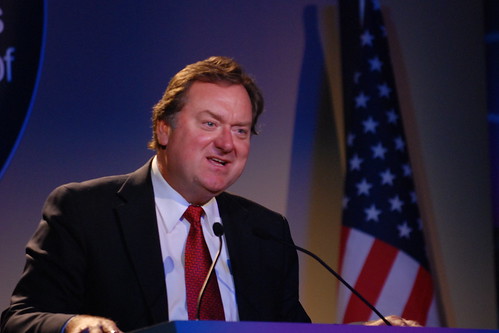
We were deeply sadden by Tim Russert's death recently. It came as a shock that a man with so much life in him was suddenly struck down.
The EMT's tried three different ways to revive Tim Russert.

Could another method had helped him? In an earlier post I talked about the reflex revival technique.  We have used it with success and hope someday that it will be studied and then adopted as a revival technique. 

The longest neuron in the body runs from the center of the big toe into the brain stem. It has no breaks and connects into an area which is related to consciousness. There are interruptions in this neuron. It has a straight shot into the metabolic areas of the brain. A strongly applied pressure can cause a strong stimulation to the electrical system of the body. It may be able to kick start the nervous system. We have done it twice where there seemed no signs of life.

Sudden Cardiac Arrest (SCA) is a leading cause of death in the United States, claiming more than 250,000 lives each year. I lost two of my brothers to it.
It is not clear that a new revival technique would have saved Tim Russert. But with these kind of statistics it seems like it would be worth investigating.

We will miss you. Tim.

Kevin Kunz